Tuesday, June 19, 2012

Blog CXXII (122): Eight Questions: World History

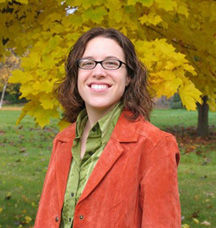
The next post in this series comes from Tiffany Trimmer.  She is currently an assistant professor of history at Bowling Green State University, where she has taught graduate and undergraduate courses on world history, historiography, empire, human rights, the Arab-Israeli conflict, and migration.  She recieved her Ph.D. from Northeastern University in 2007.  Her contribution to this blog comes in the midst of a move to a new job.  In Fall 2012 she begins teaching as assistant professor of history at the University of Wisconsin-La Crosse.  In Wisconsin she will teach courses on world history, global migration, and imperialism.  She is currently completing two research projects: a series of articles about the trans-imperial politics of labor emigration in early twentieth century British Malaya, and a book manuscript on turn-of-the-century academic representations of long-distance labor migration titled Solving the World’s “People Problem”: Social Scientists and Migration Management, 1870 -1939.

What is the greatest strength of your field? In the history profession?
World historians remind people that the inter-connectedness we think of when we hear the word "globalization" began long before the 20th century. We help people understand how long-term, and long-distance, patterns of interaction have linked their home communities to the wider world. Good world histories humanize the big, nebulous, word-scale processes that have made our present-day world the way it currently is. The migration of peoples, ideas, technologies, and diseases; long-distance trade, and the amassing of wealth versus the continuation of inequality; the formation and expansion of empires and nation states; warfare—these are some of the key processes that world historians explore in an effort to link local, regional, and world-scale narratives about humanity’s past.

History allows a person to investigate what life might have been like for those who came before us. Although there are always available evidence limitations, figuring out what you can about how people lived their lives in different historical eras or regions, and under different belief systems and labor statuses helps us put our own lives in perspective. It is also a fabulously imaginative exercise. The cool thing about being an historian is the paper (and artifact) trail—we get to take up the challenge of piecing together glimpses of the past from what remains behind.

What is the biggest issue facing your field? The history profession?
World history has been engaged in a re-branding campaign for the past two decades. The goal of this image makeover has been to emphasize the research that world historians do in addition to teaching survey courses. The Journal of World History as well as books like Donald Wright’s The World and A Very Small Place in Africa and Kenneth Pomeranz’s The Great Divergence have been influential in this transition process. Yet more work needs to be done to promote the research side of world history. Innovation and clarification of the field’s research agenda could come via re-examination of some of the core paradigms associated with the field. Wright and Lauren Benton (Law and Colonial Cultures) have both offered re-workings of Immanuel Wallerstein’s world system’s paradigm. More recently, Peter Gran’s The Rise of the Rich challenged world historians to abandon the Rise of the West paradigm (and its civilizational unit of analysis) popularized by William McNeill in favor of explanatory models that focus more on long-distance networks of people brought together by common economic agendas. In addition to publishing more, world historians also need to methodologically innovate their way towards a better reputation. Making the complexity of local-regional-world scale interconnections tangible enough for a wide range of audiences to grasp is our biggest challenge.
Despite the field’s emphasis on promoting new research, not all established world historians believe graduate students or untenured professors should be permitted to write world histories. This has made for some surreal conference sessions at the annual meeting of the World History Association as young scholars in the midst of world historical research were told they were incapable of such a task. Part of this discrimination may stem from the changing definition of what constitutes a world history—a change fostered by the past few decades of re-branding world history as a research field as well as a teaching field. In the era of world history as just a survey course, the perception was that a world history had to be as all-encompassing a possible. More recently, the notion of a world history as an analysis of connections between parts of the world has opened up the prospect for studies that selectively focus on one or more case studies that are then situated within their broader world historical context. A rallying cry of “We’re World Historians Too! Get Used To It!” has become more prevalent as successive waves of Ph.D. students employ world historical methodologies in their dissertation research. Expect the definition of what constitutes a world historical monograph or journal article to keep evolving.
This uncertainty about what is meant by the label “world history” can complicate job search strategies. Newly-minted Ph.D.s debate whether or not they should explicitly market themselves as world historians, particularly if the world history component of the job description seems tied to the teaching requirements more than the research agenda. As a hedge, you can certainly play up the trans-national, trans-imperial, or trans-regional connections highlighted in your research. But I think the best strategy is to have a succinct explanation of what your world historical research and teaching goals are ready to go at any part of the interview process. This does not mean lengthy monologs on what it means to be a world historian. But, if a member of the search committee seems to be working from a definition of world history that does not match yours, find a way to re-frame their usage of the label by discussing a brief, but illustrative, example from your research or teaching.
For the historical profession as a whole, I think there is remarkable continuity in defining our primary challenge: relevance and public outreach. One could trace an intellectual genealogy of sorts from Carl Becker in the 1930s, through Howard Zinn and David Hackett Fischer in the 1960s, to the historians assembled in the 2009 essay collection Recent Themes on Historians and the Public edited by Donald Yerxa. Connecting with wider reading, viewing, and listening publics starts with a good summary of how and why your own research helps people better understand how the world around them got to be that way. Then it requires seeking out venues—op-eds, blogs, volunteer work—that let you connect with people who you would not otherwise meet.
What is the most interesting work being done in your field? Why?
My brain short-circuits when I try to make a quick list! Because of our field’s focus, world historians read broadly. Thus, my list is probably going to seem a bit idiosyncratic. But, here goes. Marilyn Lake and Henry Reynolds’ Drawing the Global Colour Line traces the migration of ideas about white racial solidarity (and corresponding voting and property owning restrictions targeting Blacks and Asians) in the late 19th – mid 20th century “White Men’s Countries” of Canada, the U.S., South Africa, Australia, and New Zealand. It does a really good job of illustrating how ideas and policies can circulate among like-minded individuals living on different continents as they react to challenges from the “outside world” (in this case the global labor migrations of the era). In doing so, it fulfills one of the key goals of world history—bringing large-scale, fuzzy ideas down to a concrete level that readers can easily grasp.
Situating the United States within its broader geo-political and cultural contexts is another current trend. There are two books on my summer reading list that accomplish this in different ways. John C. Weaver’s The Great Land Rush and the Making of the Modern World, 1650-1900 traces the process of settlement and evolving ideas about land use in the same set of countries featured in Drawing the Global Colour Line. Donna Gabaccia’s Foreign Relations: American Immigration in Global Perspective highlights how transnational ties continued to connect immigrants (and through them, the U.S. as a political entity) to the wider world.
Histories of long-distance networks held together by migration, trade, and imperial expansion also continue to be influential. Kerry Ward’s Networks of Empire: Forced Migration in the Dutch East India Company stands out in this regard. Linda Colley’s The Ordeal of Elizabeth Marsh: A Women in World History traces an individual’s life as she moved across parts of the Atlantic, Mediterranean, and the Indian subcontinent in the 18th century. The history-through-life story approach also shines in Stewart Gordon’s When Asia Was the World: Traveling Merchants, Scholars, Warriors and Monks Who Created the Riches of the East. Gordon puts together a kind of biographical sketch of the region of Asia ca the 700s-1500s c.e. A similar kind of regional understanding, this time for the late 18th – early 19th century Atlantic, comes together in Wim Klooster’s Revolutions in the Atlantic World: A Comparative History.
Big History, histories of environmental change, and debates about the place of Europe within world history are also perennial favorites. David Christian’s Maps of Time, Fred Spier’s Big History and the Future of Humanity, and Cynthia Stokes Brown’s Big History: From the Big Bang to the Present are helping world historians expand their horizons. A starting point for the second category is Edmund Burke III and Kenneth Pomeranz’s edited collection The Environment in World History. Lastly, Ricardo Duchesne’s new book The Uniqueness of Western Civilization will keep world historians busily debating each other for months to come.
How valuable is teaching in the professional development of a career?
The most confounding piece of advice I have ever received from senior colleagues was “teaching is important but do not spend any time on it.” An active publication agenda is vital to staying employed. But becoming a solid teacher is also essential. Teaching requires more than just writing lectures and grading exams. There is also the commitment to steadily improving your presentation skills, establishing the confidence to handle whatever a class throws your way, and developing the flexibility to change teaching styles from semester to semester. Building up these competencies takes actual minutes and hours out of your day. So, look at your week and carve out specific times to write and specific times to prepare for class. Build in a back-up time slot for teaching emergencies so that if teaching prep takes more time than expected it does not threaten your writing time slot.

Given the desire of historians to better connect with the general public, it is ironic that grad students and new professors are sometimes encouraged to short change the development of their teaching skills. When someone in an airport or a dentist office tells you they hate history, ask them why. My completely unscientific sampling of responses from such encounters puts “my professor was so boring!” as the most frequent answer. Teaching is one key way the historical profession can engage with a broader range of people. It also forces historians to articulate the relevance of what happened in the past in a way that captures the imagination and curiosity of people living in the present day. Ask your students if they have ever drank a cafĂ© mocha. Then tell them that mocha represents the Columbian Exchange in a paper cup. Let the discussion of world history begin…
We are not just deliverers of content. Historians teach people how to contextualize disparate facts in relation to broad patterns of change and continuity, how to make meaningful comparisons, and how to identify and navigate the biases and contradictions within historical evidence. While teaching is not the only thing on my to-do list each day (publish!), I think it should be ok to look forward to that part of my day.
One last note on teaching as it applies to the field of world history: there is no way around the fact that world history survey courses are always works-in-progress. Deciding what to cover, and what will just have to be skipped, is a special kind of intellectual and pedagogical challenge. Balancing world-scale (big-picture) patterns and themes with specific case studies of times and places that students can investigate via primary sources takes experimentation, and frequent tinkering. Keep asking yourself: what overarching story are you trying to tell? how/why is it relevant to people born between 1990-1994? Two good primers on the pedagogy of world history are Peter Stearns' World History: The Basics and David Christian’s This Fleeting World: A Short History of Humanity. There are also two journals that publish articles on the teaching of world history: World History Bulletin and World History Connected.
What direction or type of publishing would you advise a new Ph.D. to conduct?
If your dissertation hangs together coherently, write an article that highlights your favorite examples and summarizes your main arguments. Make a list of the three journals that you consulted most regularly when you were writing your dissertation. Submit the article to the first journal on the list. If it gets rejected, revise and send to the second journal on the list. Persevere. Persevere some more. Once you have successfully placed your article, move on to the book prospectus.

If your dissertation chapters feel like they are going off in different directions (this can occasionally happen with world history dissertations) consider turning them into a series of articles that showcase the different case studies or analytical frameworks that comprised your dissertation. Develop the first article and send it to a journal. Develop the next article while you are waiting to hear back about the first article. Evaluate any parts of the dissertation that are not going into an article as a potential first chapter of a book. Find the angle from the non-article parts of your dissertation, dig out the materials and citations you did not get to incorporate into your dissertation, and plot a course forward. Keep moving your writing forward on multiple tracks. Naturally, this is far from ideal if you are applying to (or have already been hired by) a department that will only tenure for a book. But if you do not have a book-in-the-making when you graduate, keep going anyway. The point is to establish a track record as a publishable scholar.
Also: force yourself to give conference papers on a regular basis. You never know when a conference panel will turn into a special issue of a journal or an editor's request to see a revised version of your conference paper.
Other professors may disagree with this, but I strongly advise against taking a job before your dissertation is finished. The relief of being off the job market is tangible, as is the pay increase. But, in the long term, the requirements that come with the new position will eat away at your writing time and jeopardize your publication prospects.

What issues affect most the development of a career: family, school resources, popularity of field, reputation of alma matter, etc.?
The number of faculty in a department can have a major effect on what you can actually accomplish in a day, a semester, or a probationary period before going up for tenure. The 2008 financial crisis resulted in hiring freezes, and early retirements of senior faculty, that some departments have yet to recover from. All levels of historians working in a department—from the full professors down to the adjuncts—have seen more tasks handed to them as fewer people remain. It can be incredibly hard to avoid new service entanglements that threaten your writing and course prep time. Time management is vital; but not just in the obvious sense of budgeting a set amount of time for each thing that needs to be accomplished. It is not a bad idea to experiment with using it in a slightly more assertive way. Develop a really specific set of writing deadlines, and chapter circulation or journal submission timeframes, and do not be afraid to cite them when other members of your department ask you to take on more work. Sometimes you will lose, but there may be an opportunity for accommodation.
Developing a clear vision of who you are as a writer and teacher of history is vital. Keep refining this sense of your professional self. It will help you fight for your research time. It will help sustain you through rejections from journals and book publishers. It may take some of the sting away when your students write or say mean things about you. It will help you promote yourself each time you apply for a fellowship or go back on the job market. And you will be on the job market multiple times during your career. Moving is sometimes an enjoyable adventure, but if you have a significant other and/or children there's the guilt of asking them to change their lives so you can keep being a history professor. You kind of owe it to them to be a really good history professor.
Which means that part of having a lasting, and satisfying, career as a historian is accepting the fact that you have to just keep going—keep writing, keep applying for research funding, keep expanding your own knowledge base, keep refining your teaching skills, keep striving for a better balance between writing time and departmental obligations. Learn from your mistakes as a teacher, as a writer and researcher, as a colleague.
What advice would you give to an undergrad interested in working on a Ph.D. in history?
Understand what the job of being a history grad student entails and make yourself as well-rounded as you can before you begin the application process. Volunteer at a historical society or museum so that you can emphasize hands-on experience with primary source materials. Plan out which course's final paper will become your writing sample and throw all your effort into making that paper the clearest, most convincing historical argument you've ever made. Seek out professors who will critique your writing in a detailed and constructive way. Learn from their critiques and keep striving to be a better writer. Ask to see a graduate syllabus. If your campus does not have a graduate program in history, approach the graduate directors of programs you are considering applying to and see if they will share one. Start reading historiographical essays (the historian's version of a literature review) to familiarize yourself with the major authors, arguments, and methodologies currently shaping the historical fields you are interested in. (Ask your professors for citations.) Set aside an hour a week to look through the major scholarly journals in your area of interest to get a sense of the research and writing standards graduate professors will expect you to work towards. Develop your foreign language skills to their fullest potential. If possible, participate in peer tutoring or similar programs so that you can market yourself as ready and able to become a graduate teaching assistant.
Weigh the pros and cons of taking some time off to gain other types of professional experience (and build up some savings). If you end your undergraduate career with a really clear sense of what historical topic you are eager to get to work researching and writing about, the momentum may carry you through. (Use your application's personal statement to describe where you see your research going as you progress through masters and doctoral studies.) But burn-out is real, and graduate stipends generally do not let you live much better than you did as a college student. Sometimes taking a year or two off before applying can help you clarify what it is that makes you not want to be anything other than a historian. A rejection letter might have the same effect. Use the time until the next round of applications to enhance your application and keep refining your writing.

What advice would you give to a new Ph.D. unable to find employment in a history department?
Maintaining an institutional affiliation is the key to being taken seriously. Consult with your advisor or department chair about ways that you might hold onto a university email address and an appropriate way to word your email signature. Keep pursuing your publication goals as if you already had a tenure-track job. Volunteer your expertise to historical societies, museums, public school systems, and other venues that will help validate your life's work. Blog and publish op-eds as a way to keep your name and your research relevant. If you are not place-bound, be ready to pick up and go.
One of the most frustrating parts of being on the job market is trying to answer the "is it me, or is it them?" question. Sometimes it is clear why you did not get a job offer (not enough publications, teaching demonstration that went off the rails). Other times, you will never actually know. Keep working towards more publications for your cv, keep refining your teaching demonstration. If your research crosses or combines several specializations, make sure your sales pitches for each type of job are plausible and persuasive. Consider utilizing different letter writers to play up your strengths for different types of jobs. Ask faculty members to bluntly tell you what types of jobs you should or should not be applying for. If you suspect you might have a quirk or an interviewing weakness, go through mock interviews to see if faculty members in your department pick up on it. Keep your letter writers apprised of any professional developments and publications you've accomplished since the last round of recommendations they wrote for you.

Tuesday, June 12, 2012

Blog CXXI (121): Eight Questions: Agricultural History

Jim Giesen is an assistant professor of history at Mississippi State University where he oversees the graduate program's concentration in Agricultural, Rural, and Environmental History. He also directs the fledgling Center for the History of Agriculture, Science, and the Environment in the South (CHASES) and is executive secretary of the Agricultural History Society.   He earned his BA and played basketball for DePauw University.  He earned his MA degree at the University of North Carolina at Greensboro and the Ph.D. from the University of Georgia.  Giesen is the author of award-winning articles in Environmental History and Agricultural History and of the book Boll Weevil Blues: Cotton, Myth, and Power in the American South (University of Chicago Press, 2011).  He has recieved teaching awards from the University of Georgia and Mississippi State University.


What is the greatest strength of your field? In the history profession?
To be honest, I don’t know what my field is. I’m not sure I’ve ever had one and I’m not sure that fields matter like they used to.

I attended the University of Georgia to work with James Cobb, a historian of the South who has worked on the economic and cultural history of the region, chiefly. This is a guy whose work runs from nuts-and-bolts analysis of the political processes behind courting factories to the South in the mid-twentieth century, to examinations of Willie Nelson lyrics. I was attracted now only to the breadth of subjects that he studied but also the variety of approaches he took. To say even that he’s a “southern historian” is a bit thin because one of his primary intellectual concerns has been to describe the ways that the South was and is connected to the rest of the world. I’m not sure training under Cobb made me a southern historian, per se. The other historian who closely influenced my graduate training was Bryant Simon, now the director of American Studies at Temple. Bryant’s three books are on South Carolina mill workers, Atlantic City, and Starbucks. There’s not much that binds those three subjects together. So I guess I’ve been trained to think that being in a field can be temporary and that there is a tremendous amount to be learned from pushing at perceived boundaries. I think you limit what you can learn if you present your work at the same conference again and again.
But of course institutions like fields and boundaries. I’m the executive secretary of the Agricultural History Society, which is one of the oldest professional organizations for historians in the United States. There was a time when people understood what agricultural history was. But today we’re running a whole campaign to recruit new members based on the idea that people who are doing ag history don’t even realize it. “Think you’re not an agricultural historian?” the saying on our postcards goes, “Think again.” All these people out there working on farm labor and immigration, or food history, or rural institutions–they’re doing agricultural history but they don’t necessarily think to join our society, read our journal, or present papers at our conference.
All of this is to say that most days I call myself an agricultural historian, but I know I am also an environmental historian and I was trained as a southern historian. Each of these fields has their own historiography, their own central questions, their own institutional backing. Since I arrived at Mississippi State in 2006, I’ve been trying to put some of these fields together in new ways. Last fall some colleagues and I created the Center for the History of Agriculture, Science, and the Environment in the South (CHASES), which we are working to build into the premier research center for scholars interested in southern science, agriculture, and the environment. The more we get into it, the more I see the lines between all of these fields blur. And I think that’s a good thing.
I still really haven’t answered the question. So let me say this. The strengths of the fields of southern history, agricultural history, and environmental history, are that people are combining them in ways that reveal a great deal about the past that we didn’t know or misunderstood.
What is the biggest issue facing your field? The history profession?
The biggest issue facing agricultural history is clear: people don’t realize that they’re doing it. From an intellectual standpoint, the result is that people who are doing similar work—asking the same kinds of research questions, teaching the same kinds of classes, evaluating the same kinds of sources–don’t always come together to exchange ideas. Let me give an example. I know of a student at one of the top environmental history programs who is writing her dissertation on an important but understudied government agriculture program. Across the country there’s a student at a top Ivy League school who is working on the same program for his dissertation. Neither of them thought of themselves as agricultural historians. One was environmental, one was cultural. Only when they came together for a special workshop did they realize that they were doing very similar things. Each of them is going to produce a better dissertation because they made the connection at that workshop. I think historians become better the more connections they make outside of their fields.
What is the most interesting work being done in your field? Why?
This answer isn’t going to be surprising considering what I’ve written above. The most interesting work bridges fields in interesting ways. Let me provide a couple of examples. Mark Hersey, my colleague here at Mississippi State, trained as an environmental historian with Donald Worster at Kansas. His first book is an examination of the environmental vision of George Washington Carver. There’s no doubt that it’s bona fide environmental history, but it’s also about sharecropping and land use and segregation. It’s a book that historians of the South need to read if they want to better understand the constraints black farmers faced, and that’s a topic most southern historians thought they knew just about everything about.
I’ll flip the perspective for my second example. Albert Way’s recent book, Conserving Southern Longleaf: Herbert Stoddard and the Rise of Ecological Land Management, is a book that environmental historians need to take seriously if they’re to understand conservation in a distinctly non-western context. The environmental history of the South played out differently than it did around Walden Pond or at the bottom of the Grand Canyon, yet until about five years ago environmental historians weren’t taking the region seriously enough.
I also need to add here that there are always pioneers. In the case of southern environmental history among the most important is Mart Stewart. He was writing about the force of nature in the South–and self-identifying as an environmental historian–as early as anyone else and I think he’d be the first to tell you that this didn’t always redound to his benefit. Southern historians—even the editors of the Journal of Southern History–just didn’t know what to make of his environmental approach to coastal Georgia. More and more historians are realizing just how pioneering and important his work has been. Tim Silver is the other. His work on the environmental history of human interactions with nature in the Mountain South remains a model for the field.

How valuable is teaching in the professional development of a career?
In terms of the professional development of historians I don’t think it’s easy to separate teaching from research. As an example I’ll use my sister, an elementary school teacher in the Chicago Public Schools (shout out to Oscar Mayer Elementary!). She calls me every now and then to talk about the history that she’s covering in class. What often start as a question about content quickly morphs into a conversation about methods and analysis. The fundamental question “how do we know what we know?” is at the heart of good teaching. And if that’s true for fourth graders, it’s true for college students. I think a graduate class in how to teach history is a good idea. I wish our program had one. And I’m certain that there are techniques and strategies about learning that history grad students should better understand. But beyond that I think there are diminishing returns to training history grad students to be teachers. Make them better thinkers, researchers, and writers and they’ll be better teachers. And after they’ve passed their exams, give them a chance to teach on their own.

What direction or type of publishing would you advise a new Ph.D. to conduct?
Despite all of the changes in publishing that have happened over the past few years and the expected change over the next decade, the basic nuggets of advice handed down for generations remain true:

• Never let anything you’ve written sit in a drawer.

• When you have a topic, make it yours by presenting papers and publishing.

• Have thick skin. You’re going to get rejected. Learn from it.

• Expand your project in ways that make you uncomfortable. You might have to learn some cliometrics, or a different language, or weed science. It’s going to make your work better.

What issues affect most the development of a career: family, school resources, popularity of field, reputation of alma matter, etc.?
My honest answer is that this probably depends on the person. I do think that, in almost every case, great work gets noticed. Yes, people with Ph.D.s from Princeton have advantages on the job market. But it’s not because they won a lottery to get a Princeton degree. Their abilities and work had something to do with it. That said, the most important thing to do to land a position where research is valued is to publish. And manuscripts are double-blind reviewed. Your work is judged on its own merit. (Yeah, I know this process is not always perfectly meritocratic but I do believe that it most often is.) The most important thing to do to land a teaching job is to have teaching experience and to be able to document your success. You can get that anywhere.
What advice would you give to an undergrad interested in working on a Ph.D. in history?
I tell them not to do it. It’s not a growth field. It’s not the best way to spend you 20s (and 30s). Once they convince me that they’re going to do it I tell them precisely what it was that got me through grad school. It’s the only thing that did it, to be honest. That’s smart, motivated people. Find them. Surround yourself with them. Befriend them. Play basketball with them and drink beer with them and, more importantly, talk to them about history as often as you can.
What advice would you give to a new Ph.D. unable to find employment in a history department?
It’s the same advice I give grad students who are struggling: it’s okay to not do this. If you’re set against a career change, find out what you’re doing wrong. Call friends with jobs and ask them to look at your CV and cover letter and teaching statement. Ask your letter writers to see their letters. Get lots of advice from all kinds of different people. And then reevaluate.

Wednesday, June 6, 2012

Blog CXX (120): Eight Questions: Intellectual History

Lauren Kientz Anderson, a post-doctoral scholar at the University of Kentucky, has just accepted a visiting Assistant Professorship at Luther College in Decorah Iowa. She earned her Ph.D. from Michigan State University in 2010. She is the Wednesday blogger at the U.S. Intellectual History Blog. Her teaching and research interests lay in African American Intellectual History, the interwar period, and black women’s history. She is working on her first book manuscript, A Spirit of Cooperation and Protest: The Internationalism of African American Women, 1920-1939, which analyzes the way bourgeois black women of the interwar era understood and conceptualized internationalism. She argues that this era witnessed a transformation of interest among black women from Europe to Africa and India and analyzes four different types of internationalism through four different women—tourism (Yolande Du Bois-Cullen, Paris), communist internationalism (Mabel Byrd, Geneva), Christian Internationalism (Juliette Derricotte, Mysore, India), and Pan-Africanism and Colored Cosmopolitanism (Eslanda Robeson, London and Africa).

What is the greatest strength of your field? In the history profession?
Close reading and the contextualization of ideas are strengths of U.S. intellectual history. Most intellectual history works take a few thinkers and deeply analyze their ideas and their interaction with their world. This allows us to examine how individuals affect the world around them, the limits of individual power, and the ways that ideas transform individuals. Sometimes, though, intellectual history takes on a major idea, like religious freedom, and traces it throughout a large chunk of time, or takes a specific chunk of time, like the last quarter of the twentieth century, and explores all the major ideas therein. I’m thinking here of the two 2011 award winning books, David Sehat’s The Myth of American Religious Freedom and Daniel Rodgers’ Age of Fracture, which have received a lot of interest and discussion on the USIH Blog.

History is a powerful subject because it is in each of us and yet is an entirely new world to discover. In teaching, we have a challenge to make the past relevant to students (who were in junior high when 9-11 happened!), while also communicating how the past is another country. We also get to use the power of storytelling, while exploring the nuance of the situation that goes beyond the story. History encompasses both social science and the humanities; it is a broad and deep and terribly exciting profession.
What is the biggest issue facing your field? The history profession?
Intellectual history was passĂ© for many years because it was seen as the study of dead white elite men, a study which totally missed the analysis of race, class, and gender, which came to dominate history. Indeed, the students in my U.S. Intellectual History course this past semester (spring 2012) still started the course by arguing that intellectuals were dead white men. It is a challenge to the field to incorporate the new perspectives gained from the study of social and cultural history, which at the same time continuing to justify our particular strength of close reading of major thinkers and contextualization of ideas. Some of us continue to study the history of “elites” (of all colors and genders) and need to be able to justify that effort. Others are studying the way that ideas affect culture and culture affects ideas, which does not necessarily mean the study of elites.  For other thoughts on the future of U.S. intellectual history, she this guest post by Dan Wickburg.

I think the current economic crisis is negatively affecting any discipline that is not directly connected to a specific job. At the same time, the United States continues to have a deep trench of anti-intellectualism throughout our culture. The recent attack on Black Studies in the Chronicle of Higher Education blogosphere is an apt example.  (I weighed in here).
What is the most interesting work being done in your field? Why?
There has been a resurgence of interest (or perhaps organization of already existing interest) in intellectual history since Tim Lacy and others started the U.S. Intellectual History Blog and conference. These two have morphed into the Society for U.S. Intellectual History, which was founded in 2011. Consult the past conference schedules to see some of the up and coming topics in U.S. intellectual history. I am excited to see Derrick Aldridge’s intellectual history of hip hop finished and published. I also thoroughly enjoyed hearing updates on Jennifer Ratner-Rosenhagen’s American Nietzsche: A History of an Icon and His Ideas at the USIH conferences, because of her nuanced understanding of the way that Nietzsche worked his way into the American psyche.
How valuable is teaching in the professional development of a career?
Teaching keeps us grounded in the ideas prevalent among the young today. It lets us practice the clear statement of our current thoughts. It also exposes us to the ability of some ideas to transform and reminds us of the persistence of other ideas, (like, for instance, my students eager articulation of the ability of an individual to transform society and their struggle to understand the limits of an individuals’ power). Teaching keeps us humble and pushes us to think about the real-life worth of our professional work.
What direction or type of publishing would you advise a new Ph.D. to conduct?
Many of the other individuals who have answered this question have given fantastic advice. Let me spend a few moments on the power of new social media as a kind of “publication.” As a weekly blogger at USIH, I receive many more readers than my academic publications will (probably) attract. It has taken a long time (the blog has been active for five plus years) to build a readership and much of it has come because of the excellent posts by my fellow bloggers. Blogging gives me a chance to articulate my research and teaching ideas as they come to me and have immediate feedback on the quality of my pursuits. At the same time, there is always a danger of exposing too much, personally or research-wise. I don’t want a future publisher to think that I have already given away my book on the blog.
What issues affect most the development of a career: family, school resources, popularity of
field, reputation of alma matter, etc.?

I sat on several search committees during my graduate school career and from that vantage point, I would say it really depended on each individual member of the search committee what they valued most. Some were attracted by the newness and intellectual potential of the project. Others looked at language capability (for positions outside the US), publication record, alma mater and other things. I would say the role of an advisor is very important. Some students are attracted to famous advisors who then provide no career or research guidance. They may be able to write letters with impact, but they do not help the student to finish the degree on time or craft their project. I had the advantage of an advisor who met with me weekly to discuss my projects and ideas, while also letting me flounder a bit and find my own footing. He’s not famous, but I also don’t think I would have written the dissertation I did without his guidance and encouragement. But now, will that dissertation and the publications stemming from it help me land a tenure-track position?

During graduate school, institutional resources help you focus on your project without a huge teaching load, help you practice teaching, and also help you get to the archives. Family helps you stay sane, while also driving you crazy. But I still think the personality and helpfulness of the advisor is central to graduate school success.
What advice would you give to an undergrad interested in working on a Ph.D. in history?
Do it because nothing else will make you happy. Take some time to figure out what project will really excite you and keep you interested for 10 years. Do your best to find out your potential advisor’s personality as well as his/her reputation. Contact them by email and see if they respond. Ask to be put in touch with his/her other students (graduated, if possible, or current). Recognize that getting a job is going to be difficult, but don’t be too careerist in your life choices. Go to as many conferences as you can afford and get over your shyness to talk to as many different type of people as you can; if they don’t talk back let it be about them, not you. And most importantly, always remember and remind yourself about what you love about history. Talk to friends and family about the exciting minutia that you learned or discovered that day. Work as much as your body will allow, but then find things (other than tv) that will renew your energy. I love art and friends for that.
What advice would you give to a new Ph.D. unable to find employment in a history department?
Try everything. Be willing to move anywhere. You can do anything for a year. But also assess your life-goals and family needs. Expect that you will have several temporary positions before you land a tenure-track job. And no matter what, keep working on the book. Make that a priority before teaching and job hunting, rather than vice versa. Work on it everyday, even if it’s only 15 minutes. Everyone can spare 15 minutes, right? And it will remind you where you are in the research process. Otherwise, if you wait for a vast uninterrupted chunk of time, it’ll take you a lot of it just to reorient yourself towards your research. But at the same time, let articles and chapters stew for a while before you work on them again with fresh eyes. Don’t let fear (of finding a job, of moving, of not being good enough) get in the way of writing. Find a place (inside of yourself and physically in the world) that makes you feel peaceful and go there. And write!

At the same time, care about your students. Let them know that you are interested in their lives and in their intellectual progress. But let go of their success; give it up to the universe—they are in charge of their life choices and you can’t make them for them.

And be able to make friends quickly, with all different kinds of people. Be open to what everyone can teach you and how they can help you on your journey. It’s not about networking—it’s about intellectual touchpoints—the connecting of minds for a brief or a long time. Be an interesting person—read widely, have hobbies, love your research—so that there is always something to talk about with new people.

Saturday, June 2, 2012

Blog CXIX (119): A Question to You

If you had a chance to ask a senior historian a question about the profession, what would ask him or her?  We are talking someone at the top of their game; someone who is a Pulitzer Prize winner or a president of the American Historical Association.  Why do I ask?  When the "Eight Questions" series comes to an end, I plan to start another.  The difference being I plan to make senior scholars--perhaps those that might even be described as stars--the focus of the questions.  The purpose of this blog is to serve junior scholars at the begining of their careers, and it strikes me that different people might have different concerns.  So, what questions would you like to have answered?

Friday, May 25, 2012

Blog CXVIII (118): Eight Questions: Sports History

The next essay in the Eight Questions series comes from Maureen Smith, a professor of Kinesiology and Health Science at California State University Sacramento.  She earned her Ph.D. from The Ohio State University.  Her teaching and research interests focus topically on the Olympics and physical education, and thematical on race and gender issues.  She is the author of Wilma Rudolph: A Biography (2006).  She was president of the North American Society for Sport History in 2010. Smith also served as secretary and then later as the president of the Western Society for Physical Education of College Women.  Smith was also the co-editor of the International Society for the History of Physical Education and Sport Bulletin.  She currently serves on the executive committee of that organization.

What is the greatest strength of your field? In the history profession?
One of the greatest strengths in the field of sport history is the diversity of topics. Scholars focus on time periods, themes, countries, specific sports, etc. Within sport history, we have Olympic historians, baseball historians, historians of women in sport, etc. I think this is similar to the broader field of history, that scholars choose their era, subject, focal point, etc. I am always amazed by the range of subjects presented at conferences and articles published in sport history journals. Sport and history are the two umbrellas under which we all reside, but our individual interests and pursuits make our field a diverse and engaging subject for academic study. I’d also include the methods of approaching and analyzing our topics--from traditional descriptive history to postmodern theoretical approaches--which make for interesting reading and dialogues among colleagues.
What is the biggest issue facing your field? The history profession?
For sport historians, the biggest issue facing us at this point in time is academic positions and availability or lack thereof. Kinesiology departments, including sport management programs, hire sport historians to teach classes in sport history, as well as other coursework in the social sciences and humanities pertaining to sport. Fewer history departments hire sport historians; rather, they hire a historian who has an interest in sport and then designs a course in sport history. There are several graduate programs in sport history in the United States and Canada, located within kinesiology departments. Many are finding jobs that provide them with the opportunity to teach a class or two in sport history, with the remainder of their teaching load covering other programmatic needs.
What is the most interesting work being done in your field? Why?
This is really, I think, an individual and personal preference. For me, I am partial to the issues and topics related to diversity, specifically the sporting experiences of African Americans, during the period of post-World War II America. The line of inquiry has encouraged other scholars to examine Asian American sport experiences, as well as other ethnic groups that are often marginalized in sport (and society). There have been some great articles detailing the integration processes at a number of universities. I am also very interested in the work being done by scholars on material culture, whether it be photographs, postage stamps, statues, or other tangible objects that serve both as artifacts and as the subject of inquiry. To answer the question more broadly, there are a number of journals publishing quality sport history research and while I am not always personally interested in the topic or time period, sometimes the methodologies and approaches are more than enough reason to continue reading.
How valuable is teaching in the professional development of a career?
The value of teaching in the professional development of a career largely depends on the type of university one works. At a university where teaching comprises the major portion of one’s responsibilities, and your tenure and promotion are determined by your teaching materials and evaluations, teaching is of the utmost importance. In the California State University system, faculty routinely teach four courses a semester and their teaching performance is the area which is valued the most in their tenure and promotion process. Faculty at research universities have a much different teaching load, with a greater emphasis on research. I don’t think this means they value teaching any less, but their teaching is valued less in the process of awarding tenure and promotion.
What direction or type of publishing would you advise a new Ph.D. to conduct?
As a mentioned above, there are a number of journals, many unrelated to sport, that publish sport history research. Some scholars will write an article with a specific journal in mind, others will have a ranked order of journals to send their article. Depending on one’s department, non-traditional means of publications may be considered in their tenure review, such as blogs or other forms of social media platforms. As to direction, I would encourage the new Ph.D. to focus on what interests them. They’ve just finished a dissertation and if they are like many of us, ready to explore some new materials.
What issues affect most the development of a career: family, school resources, popularity of field, reputation of alma mater, etc.?
Again, I think this is a question that relies largely on the individual and how central their career is to their identity, and how these various factors influence that career. We know that some fields are not only more popular, but well-funded. Sport historians are best not to fall into the natural trap of social comparison. The sciences will almost always enjoy a greater public celebration and value. However, no matter the type of academic institute one lands, the individual can really shape their career into whatever they want it to be. Perhaps your institution doesn’t value your work the way you’d like, but--your professional organizations do value it. Maybe your colleagues don’t even know what sport history entails and you’re the only one on your campus in the field--but you have colleagues around the country who are in similar positions. Your passion and commitment to the field is conveyed to your students and others in the field who value the work and ideas you share. One thing that sport historians may run into is the popular misconception that what we do is sport trivia as opposed to sport history. Sometimes, despite the popularity of sport, many people do not value the academic study of sport, believing it to be not serious or scholarly enough. Because it is fun for people to watch and participate in sport, studying it, which can also be fun, seems to not be taken seriously as an academic discipline. This is unfortunate. With the rise of ESPN and other mediated outlets for sport, more people really believe they know much more than they do. This is a fun challenge for us in many ways, to think about how to make our work more accessible to the public, without compromising our desire for footnotes.
What advice would you give to an undergrad interested in working on a Ph.D. in history?
If a student is in a graduate program in history and they are interested in focusing on sport history, I think the student is already on a path that will be helpful for an academic job. It is much easier for a history PhD to land a job in a history department than for a kinesiology PhD. Of course, the history PhD would most likely have to teach other topics in history, so sport would be an interest area that might not be initially open to them. The student should think about what department they’d eventually like to work in, and what courses they’d like to teach. If their focus is sport, then perhaps it is better to enter a kinesiology program and take coursework in history. They might also consider American Studies programs, which offer a range of coursework from multiple departments and disciplines.
What advice would you give to a new Ph.D. unable to find employment in a history department?
For someone interested in teaching sport history, you might consider departments of American studies, kinesiology, and sport management. I think some non-history departments would be reluctant to hire a historian to teach sport history, largely because they would need you to be able to teach in other areas of kinesiology, but it’s possible depending on the size of the program and the graduate degrees offered.

Thursday, May 17, 2012

Adminstrative Note 18

Work related travel will prevent a posting for this week.  Return next week for another entry in the Eight Questions series.

Monday, May 7, 2012

Blog CXVII (117): Eight Questions: Women's History

The next contribution in the Eight Questions series comes from Susan Rensing of the  University of Wisconsin Oshkosh.  She earned her Ph.D. from the University of Minnesota and is currently Assistant Professor of History and Women’s Studies at Wisconsin Oshkosh. Rensing’s teaching and research interests include American women’s intellectual history and contemporary reproductive rights debates. She is working on her first book manuscript, Sexual Eugenics: Redefining Love, Marriage, and Reproduction in America, 1900-1939. This book explores the eugenic vernacular of early twentieth century America and examines the gender politics that were central to public discourse surrounding eugenics.

What is the greatest strength of your field? In the history profession?
The greatest strength of women’s history is its feminist foundation. As Anne Firor Scott has said, “from the beginning, women’s history developed in close association with women’s activism.” The core assumption of the field since its beginning has been that uncovering women’s pasts is an important step toward shaping women’s futures. Women’s history has been critical to illustrating the social construction of gender and to inspiring activist movements in our own time.

What is the biggest issue facing your field? The biggest challenge facing the history profession?
The biggest issue facing women’s history as a field is the extent to which it is being replaced by “gender history.” In one sense, the history of gender has always been one of the goals of women’s history and so gender history is just a natural evolution of the field. But, in other sense, the many successes of women’s history have lead to the widespread adoption of gender as a category of historical analysis in virtually every field. Obviously, this is a great development in many respects, but the downside is that this dilutes the identity of women’s history as a field of historical study and, in some cases, severs the field from its feminist foundation.
The biggest challenge facing the history profession is the same challenge that is facing all of academe: the deskilling of the profession.

What is the most interesting work being done in your field? Why?
I love scanning recent dissertations in women’s history to see where the field is headed. Here are some that have excited me lately: Katarina Keane, "Second-wave Feminism in the American South, 1965-1980" (University of Maryland, College Park, 2009); Erica Jean Ryan, "Red War on the Family: Sex, Gender, and Americanism, 1919-1929" (Brown University, 2010); Stacie Taranto, "Defending Family Values: Women’s Grassroots Politics and the Republican Right, 1970-1980" (Brown University, 2010). I think that our understanding of anti-feminism in the U.S. is going to be really strengthened in the next decade, and I think the history of reproductive rights movements in the South is still largely untold.
How valuable is teaching in the professional development of a career?
Teaching is the career and I think it is important not to lose sight of that. Historians are always teaching someone about the past, whether it is in the classroom, or with published research, or in a public history setting, or just as an intellectually engaged citizen.
What direction or type of publishing would you advise a new Ph.D. to conduct?
It depends on the kind of career you want. If you are interested in public history, then publish in local history journals and get savvy about social media and digital history initiatives. If you are interested in public policy careers, then you need to demonstrate that you can write broadly and are not rigidly academic. If you want an R-1 tenure-track job, then your dissertation should be ready for press within a couple years and you should try to publish an article in a top-tier journal by the time you finish grad school (or shortly thereafter). If you want to work at a community college or a regional college, you should engage in the scholarship of teaching and learning and demonstrate that you are passionate about educating first-generation college students.
What issues affect most the development of a career: family, school resources, popularity of field, reputation of alma mater, etc.?
Anyone who tells you that the reputation of your alma mater doesn’t factor into hiring decisions is lying to you. It matters, and particularly the reputation of your adviser matters, so choose carefully. The institutional climate and resources at a college and university matter enormously, especially for women, LGBTQ folks, and people of color. Weigh these factors heavily when considering job offers: faculty mentorship programs, research & teaching development funds, childcare facilities, parental leave policies, domestic partnership benefits, and departmental culture. The popularity of your field certainly can help or hinder your job prospects, but your approach to your field matters just as much. If you are innovative in your research, eclectic in your teaching abilities, and creative in your professional skill set, then having a Ph.D. in American history will not be too much of a hindrance.
What advice would you give to an undergrad interested in working on a Ph.D. in history?
I would advise taking a year or two off before beginning graduate school to get more work experience, save up some money, and make sure that a Ph.D. is what you really want. If it is, then go for it and don’t let all the naysayers get you down!

What advice would you give to a new Ph.D. unable to find employment in a history department?
Think beyond the academy. When I mentally thumb through the rolodex of my graduate school cohort, only about half of them are currently employed in departments in a college or university. Others are archivists and curators at museums, policy analysts, grant writers, popular history writers, editors, administrators for various undergraduate programs, institutional historians for various government agencies, etc. More importantly, all of those people are fulfilled by the work they are doing and loving life. Your success or failure as a human being doesn’t depend on whether or not you find a tenure-track position.